How often should electrical switches be replaced? Learn the warning signs, expected service life, safety risks, and when an electrician should inspect them.
A light switch can work for years without getting much attention.
You flip it on, flip it off, and rarely think about what is happening behind the wall.
But a switch does not last forever, and waiting for it to completely fail is not always the safest approach.
How often should electrical switches be replaced?
There is no single replacement date that applies to every home.
The condition of the switch, how often it is used, the electrical load, installation quality, and age of the electrical system all matter.
A switch that feels loose, makes a buzzing sound, gets warm, or shows discoloration deserves attention even if the light still works.
If you notice these signs, an electrician can inspect the switch and determine whether the problem is limited to the switch or points to a larger wiring issue.
The Electrical Safety Foundation International (ESFI) lists heat, discoloration, buzzing, flickering, odors, and loose switches among warning signs that should not be ignored.
That makes condition more important than simply counting the years.
Is There a Set Lifespan for Electrical Switches?
Unlike some household products, standard light switches do not have one universal replacement schedule.
A properly installed switch can remain useful for many years.
However, its service life can vary based on:
- How often the switch is used
- The type of switch
- The electrical load it controls
- The quality of the device
- Heat and moisture exposure
- Whether the wiring is in good condition
- How well the switch was installed
For this reason, how often should electrical switches be replaced is better answered with a condition-based approach.
If a switch works normally, stays cool, feels secure, and shows no signs of damage, immediate replacement may not be necessary just because it is old.
Signs an Electrical Switch Should Be Replaced
You should pay attention to how a switch behaves.
Small changes can point to a larger electrical problem.
1. The Switch Feels Hot
A switch should not normally become hot during ordinary use.
A warm or hot switch can indicate an overloaded circuit, loose connection, damaged device, or another wiring problem.
NFPA safety guidance advises homeowners to contact a qualified electrician when switches or outlets are warm or discolored.
If the switch is hot to the touch, stop using it and have it inspected.
2. You Hear Buzzing or Crackling
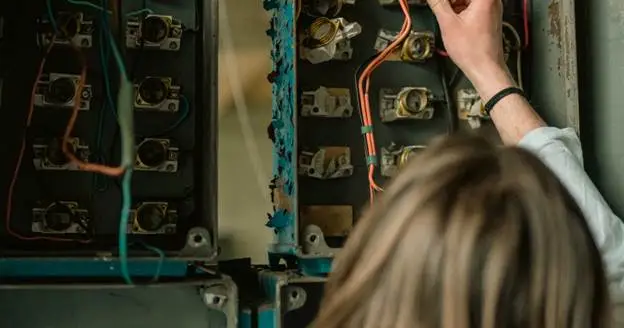
Buzzing, sizzling, popping, or crackling sounds are another warning sign.
ESFI specifically recommends checking switches and outlets for unusual sounds such as crackling, buzzing, or sizzling.
Do not assume the noise is harmless just because the light still turns on.
3. The Switch Feels Loose
A switch should sit firmly in place.
If it wiggles, leans, or moves when you press it, the problem may be the switch, mounting hardware, electrical box, or wiring.
A leaning or loose switch is a warning sign.
A loose switch should be checked rather than repeatedly tightened without finding the underlying cause.
4. There Is Discoloration
Brown, black, yellow, or melted-looking areas around a switch can indicate overheating.
Discoloration is not normal wear that should simply be painted over or ignored.
It can signal heat damage or an electrical connection problem.
The U.S. Consumer Product Safety Commission (CPSC) identifies warm switch plates, burning smells, sparks, flickering lights, and failed circuits as signs of electrical trouble.
5. You Smell Burning Plastic
A burning or unusual electrical smell near a switch is a serious warning sign.
Turn off the affected circuit if you can do so safely and have a qualified professional investigate the problem.
Do not remove the switch yourself to look for the cause.
Should You Replace a Switch That Still Works?
A switch does not have to stop working before replacement makes sense.
You may want to replace one because:
- It has visible damage
- It feels loose
- It produces unusual sounds
- It becomes hot
- It has signs of arcing or overheating
- It is outdated for the intended use
- You want a dimmer, timer, or smart switch
- The switch is not suitable for the connected load
Switches should be rated for the connected load and should not show evidence of overheating or physical damage.
That last point is important.
A switch may physically fit in the wall while still being the wrong type for the job.
What About Old Homes?
Older homes deserve extra attention because the switch may not be the only issue.
The electrical system could contain older wiring, outdated grounding, overloaded circuits, or connections that no longer meet current requirements.
For instance, the CPSC has warned about hazards involving aluminum wiring, including warm switch plates, flickering lights, burning odors, and arcing.
If your home is older and you are replacing several switches, it can be worthwhile to have the wiring checked at the same time.
Replacing the visible switch without addressing a damaged connection behind it may only hide the symptom.
What If a Switch Controls a Heavy Load?
Some switches control more than a small light fixture.
A switch may operate equipment that draws considerably more power.
In these cases, the switch must be properly rated for the load.
If a switch controlling a high-load device becomes hot, buzzes, sparks, or trips a breaker, do not keep using it to see if the problem goes away.
NFPA states that switches must be rated for the connected load.
A qualified electrician can determine whether the problem is the switch, wiring, circuit, or connected equipment.
How Often Should Electrical Switches Be Replaced?
No fixed number of years applies to every switch.
Instead, replace a switch when it becomes damaged, unsafe, unreliable, incompatible with the electrical load, or shows warning signs of electrical trouble.
For a healthy switch, regular visual checks are more useful than replacing it on an arbitrary schedule.
Look for:
- Heat
- Discoloration
- Sparks
- Buzzing
- Burning odors
- Loose movement
- Flickering lights
- A switch that no longer operates correctly
If any of these appear, do not wait for the switch to fail completely.
Conclusion
So, how often should electrical switches be replaced?
Based on condition, safety, and suitability rather than age alone.
A switch that is cool, secure, undamaged, quiet, and working correctly may not need immediate replacement.
But heat, buzzing, discoloration, burning smells, sparks, loose movement, or repeated electrical problems are reasons to have it checked.
And if several switches in your home are old or showing similar problems, do not assume each one is failing separately.
The underlying issue could involve the wiring or circuit itself.
Good electrical maintenance is not about replacing parts unnecessarily.
It is about noticing warning signs early and making sure every switch is safe for the job it is doing.