What does air conditioning service include? This article shows exactly what technicians check, clean, test, and inspect during a typical AC service visit.
What does air conditioning service include when a technician arrives at your home?
It is more than changing a filter and switching the system on.
A proper service visit can involve checking the electrical parts, airflow, coils, refrigerant, controls, drainage, and other parts that affect how the system cools your home.
That matters because an air conditioner can still run while developing a problem.
A dirty coil may reduce cooling performance.
A blocked drain can cause water damage.
A refrigerant leak can make the system work poorly.
Regular checks can help spot these issues before they become bigger repairs.
If your AC is already struggling, locating a qualified HVAC contractor provider can be able to assess related heating and cooling equipment.
So, what should you expect to happen during an AC service visit?
The answer depends on the equipment, but there are several key areas a proper service should cover.
Let’s take a look at each of them.
What Is Included in Air Conditioning Service?
A professional AC service normally involves inspection, cleaning, testing, and adjustment where needed.
The exact checklist can vary by system and manufacturer.
The Air Conditioning Contractors of America (ACCA) has a residential maintenance standard that covers areas such as electrical components, controls, mechanical parts, air distribution, piping, and refrigeration components.
A typical service may include the following.
1. Checking the Air Filter
The filter is one of the first things worth checking because it affects airflow.
A dirty filter can restrict the amount of air moving through the system.
ENERGY STAR recommends checking central AC filters regularly and replacing or cleaning them when needed.
A technician may:
- Inspect the filter
- Replace it if necessary
- Check for airflow restrictions
- Recommend a suitable filter for the system
A filter replacement is useful, but it should not be mistaken for a complete AC service.
2. Inspecting and Cleaning the Coils
Your air conditioner has indoor and outdoor coils that play a major role in moving heat out of the home.
Dirt and debris can reduce the system’s ability to transfer heat.
ENERGY STAR notes that dirty evaporator and condenser coils can make an AC run longer and reduce its cooling performance.
During service, a technician may inspect the coils and clean them when needed.
The outdoor condenser also needs attention because leaves, grass, dust, and other debris can collect around it.
3. Checking Refrigerant
Refrigerant is essential to the cooling process, but adding refrigerant should not automatically be part of every service visit.
A technician may check the system for signs of incorrect refrigerant levels or a possible leak.
If a system is low, the important question is why.
EPA guidance recommends having technicians locate and repair refrigerant leaks rather than repeatedly topping off a leaking system.
This is important because low refrigerant can be a symptom of a problem rather than something that simply needs to be refilled.
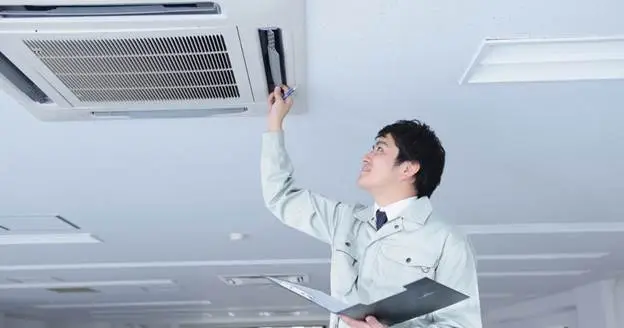
4. Testing Electrical Components
An AC system relies on several electrical parts to start, run, and stop correctly.
A technician may inspect and test:
- Electrical connections
- Capacitors
- Contactors
- Wiring
- Disconnects
- Controls
Loose or damaged electrical connections can affect how the system operates and may create safety concerns.
ACCA’s residential maintenance standard includes inspection of electrical and control components as part of HVAC maintenance.
5. Checking the Condensate Drain
Air conditioning removes moisture from indoor air.
That moisture needs somewhere to go.
The condensate drain carries water away from the system.
If the drain becomes clogged, water can back up.
ENERGY STAR warns that a plugged drain can cause water damage and affect indoor humidity.
A service visit may therefore include checking the drain line, drain pan, and related components.
6. Checking the Blower and Airflow
Good cooling depends on proper airflow.
A technician may inspect the blower and other air-moving components to make sure air is moving through the system as it should.
ENERGY STAR notes that airflow problems can reduce AC efficiency and that blower components should be checked and cleaned when needed.
If some rooms feel much warmer than others, airflow problems may be worth investigating.
7. Testing the Thermostat and Controls
Your thermostat tells the AC when to start and stop.
During service, an HVAC contractor may check whether:
- The thermostat responds correctly
- The AC starts when it should
- The system shuts off correctly
- The temperature setting matches actual operation
- Other system controls work properly
A faulty thermostat is not always the cause of a cooling problem, but checking it can help rule out a basic control issue.
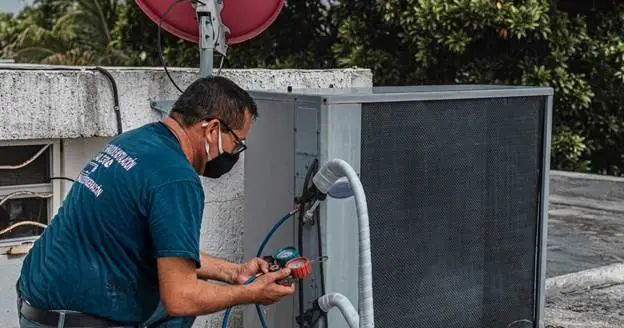
8. Inspecting the Outdoor Unit
The outdoor unit is exposed to weather, dirt, plants, and debris.
A technician may inspect:
- The condenser coil
- Fan and motor
- Electrical components
- Refrigerant lines
- Cabinet and surrounding area
- Airflow around the unit
Keeping the area around the condenser reasonably free of obstructions helps the unit release heat properly.
Does AC Service Include Repair?
Service and repair are related but different.
Service is mainly about inspecting, cleaning, testing, and maintaining the system.
Repair involves fixing a fault that has already been identified.
For example, a technician may find a damaged capacitor during a service visit.
Inspecting the capacitor is part of the service.
Replacing it is a repair.
A good technician should explain what was found and tell you which work is routine maintenance and which work is an additional repair.
What Is Not Usually Part of Basic AC Service?
A standard maintenance visit does not automatically mean every possible AC problem will be fixed.
You may need separate work for:
- Major refrigerant leaks
- Compressor failure
- Damaged motors
- Faulty electrical components
- Ductwork problems
- Thermostat replacement
- Major drainage issues
- Complete system replacement
The technician should identify these issues separately rather than presenting every repair as routine maintenance.
Conclusion
So, what does air conditioning service include?
A proper service usually involves checking the filter, coils, refrigerant condition, electrical components, controls, condensate drain, blower, airflow, and outdoor unit.
The exact checklist depends on the type and condition of your AC system.
Good service is not just about making the unit run for a few minutes.
It is about checking the parts that affect cooling performance, airflow, safety, drainage, and system operation.
If a technician finds a fault during the visit, ask whether it is normal maintenance or a separate repair.
That little question can make your service report much easier to understand and help you make a better decision about the next step.