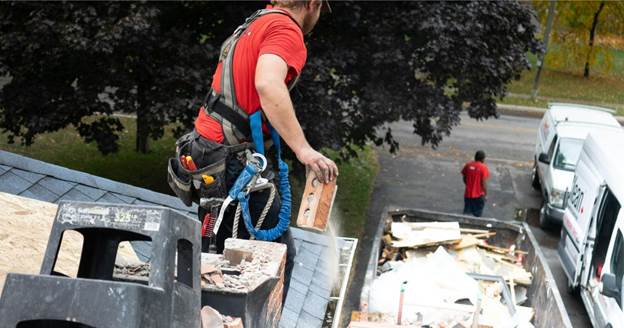
Can roofing paper get wet? Learn what happens when roofing felt gets wet, when it can be used, and when damaged underlayment should be replaced.
A sudden rainstorm can turn a roofing job into a race against the clock.
You may have the shingles waiting nearby, but the roofing paper is already spread across the roof deck.
Then the clouds open up. So, can roofing paper get wet without causing a bigger problem?
Yes, roofing paper can get wet, but how well it handles the water depends on the type of underlayment and how long it stays exposed.
Traditional asphalt felt and modern synthetic underlayments do not react to moisture in exactly the same way.
Some can handle brief rain during installation, while others should be replaced if they become badly soaked, torn, or damaged.
I have also seen how important proper underlayment is when working with roof systems.
Whether you need a commercial roofing contractor Bryan or are checking a roofing job yourself, knowing what wet roofing paper means can help you make a better decision.
What Is Roofing Paper?
Roofing paper, often called roofing felt or underlayment, sits between the roof deck and the shingles.
Its main job is to provide a second layer of protection against water. It can also help protect the roof deck while the final roof covering is being installed.
There are two common types:
- Asphalt-saturated felt: Traditional roofing felt made with a paper or organic base saturated with asphalt.
- Synthetic underlayment: Usually made from materials such as polypropylene or polyethylene.
Modern synthetic products are generally more resistant to moisture and tearing than traditional felt. GAF notes that synthetic underlayments are designed to provide weather-resistant protection beneath the roof covering.
Can Roofing Paper Get Wet?
Yes, roofing paper can get wet. However, wet does not always mean ruined.
If a short rain shower hits properly installed underlayment, the material may still be usable once conditions improve.
The bigger concern is how much water it received, how long it stayed wet, and whether the material was damaged.
Traditional asphalt felt needs more care. TAMKO’s roofing instructions state that asphalt-saturated felt should be applied to a dry deck and can be adversely affected by moisture and weathering when left exposed.
Synthetic underlayment usually handles moisture better. For example, GAF says its FeltBuster synthetic felt resists moisture and does not absorb water like traditional felt.
However, it is still water-resistant, not waterproof.
What Happens When Roofing Paper Gets Wet?
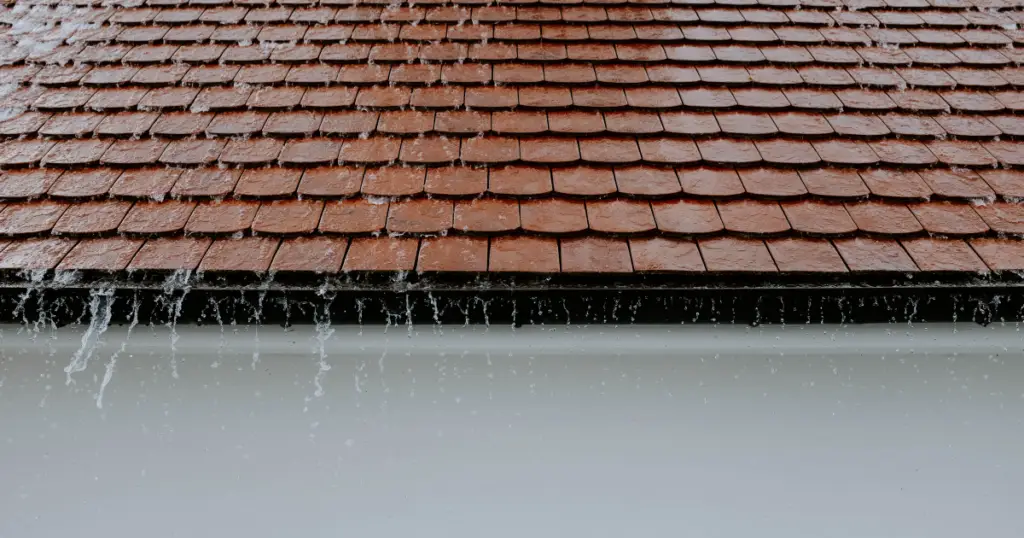
The result depends on the material.
Traditional roofing felt
When traditional felt becomes wet, it can:
- Absorb some moisture
- Wrinkle or swell
- Become weaker
- Tear more easily
- Develop problems if moisture becomes trapped underneath
That does not mean every wet sheet must automatically be removed. But if the felt is badly saturated, damaged, or has been exposed to repeated rain, replacement may be the safer choice.
Synthetic underlayment
Synthetic material generally handles water better because it is designed to resist moisture.
Still, you should not treat it like a finished roof. GAF specifically warns that synthetic roof deck protection is not waterproof and should not be used as a temporary roof.
How Long Can Roofing Paper Stay Wet?
There is no single time limit that applies to every roofing paper product.
The manufacturer’s instructions matter most.
For example, GAF’s FeltBuster instructions allow up to 90 days of UV exposure, but GAF points out that this number does not mean the material can safely withstand water, snow, or wind for 90 days.
This is an important distinction.
UV exposure time is not the same thing as weather exposure time.
If rain is expected, the roofing crew should follow the product instructions and protect the roof system as needed.
Should Wet Roofing Paper Be Replaced?
Not always.
You should inspect it before continuing the roofing work. Look for:
- Tears or holes
- Large wrinkles
- Loose or missing fasteners
- Severe swelling
- Sections that have pulled away from the deck
- Water trapped underneath
- Signs of damage to the roof deck
Small areas of damage may be repairable, depending on the product instructions. Larger or badly damaged sections may need replacement.
If the roof deck itself has become wet, that also needs attention. Installing shingles over a deck that has trapped moisture can create problems later.
Can You Install Shingles Over Wet Roofing Paper?
It depends on the product and installation instructions, but installing over soaked or damaged underlayment is generally a bad idea.
The roof deck should be in suitable condition, and the underlayment needs to be installed correctly before the shingles go on.
Owens Corning, for example, instructs installers to follow the underlayment manufacturer’s instructions and applicable building codes when installing synthetic underlayment.
If the roofing paper is heavily wet, wrinkled, torn, or contaminated with mud and debris, stopping the installation and inspecting the material is usually better than covering the problem.
What Should You Do If Rain Hits During Installation?
If rain starts while roofing paper is exposed:
- Stop work if the roof becomes unsafe. Wet roofing materials can become slippery.
- Protect materials that can be damaged by water.
- Check the underlayment after the rain stops.
- Look for tears, wrinkles, loose sections, and trapped water.
- Check the roof deck for moisture or damage.
- Replace damaged sections when required.
- Follow the manufacturer’s installation instructions before installing shingles.
Safety matters here, too. GAF warns that wet conditions can make underlayment slippery and increase the risk of falling.
Wet Roofing Paper vs. Waterproof Underlayment
It is easy to assume roofing paper is waterproof because it is designed to keep water away from the roof deck.
But water-resistant and waterproof are not the same thing.
Standard underlayment is normally a secondary layer beneath the shingles. Certain self-adhered ice-and-water products are designed to provide stronger waterproof protection in areas such as roof edges, valleys, and other vulnerable locations.
The exact product and local building requirements determine where these materials should be used.
When Should You Call a Roofing Contractor?
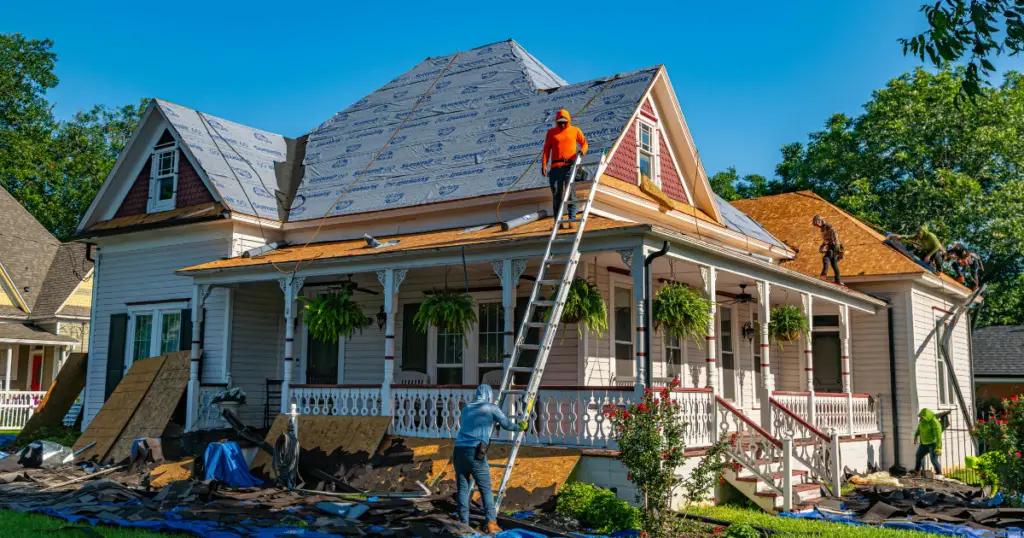
You should consider professional help if:
- The underlayment has been soaked for an extended period.
- Water has reached the roof deck.
- You see mold or signs of rot.
- Large sections are wrinkled or torn.
- The roof was exposed to heavy wind and rain.
- You are unsure whether the material is still suitable.
For larger commercial projects, this becomes even more important.
A contractor handling a commercial roof replacement College Station project, for example, needs to consider the roof system, deck condition, underlayment requirements, weather exposure, and local codes together.
A smaller repair may have a different solution. Someone dealing with commercial roof repair College Station may only need to replace a damaged section rather than the entire roof system.
Conclusion: Can Roofing Paper Get Wet?
Yes, roofing paper can get wet, but that does not automatically mean it needs to be replaced.
A brief rain may not ruin properly installed underlayment. The real concern is prolonged moisture, trapped water, physical damage, and using a product outside its intended exposure limits.
Traditional felt generally needs more protection from moisture, while synthetic underlayment is more resistant to water.
Either way, roofing paper is not a substitute for the finished roof covering.
If your roofing paper has gotten wet, inspect the material and roof deck before shingles are installed.
When in doubt, follow the manufacturer’s instructions or have a qualified roofing professional check it.