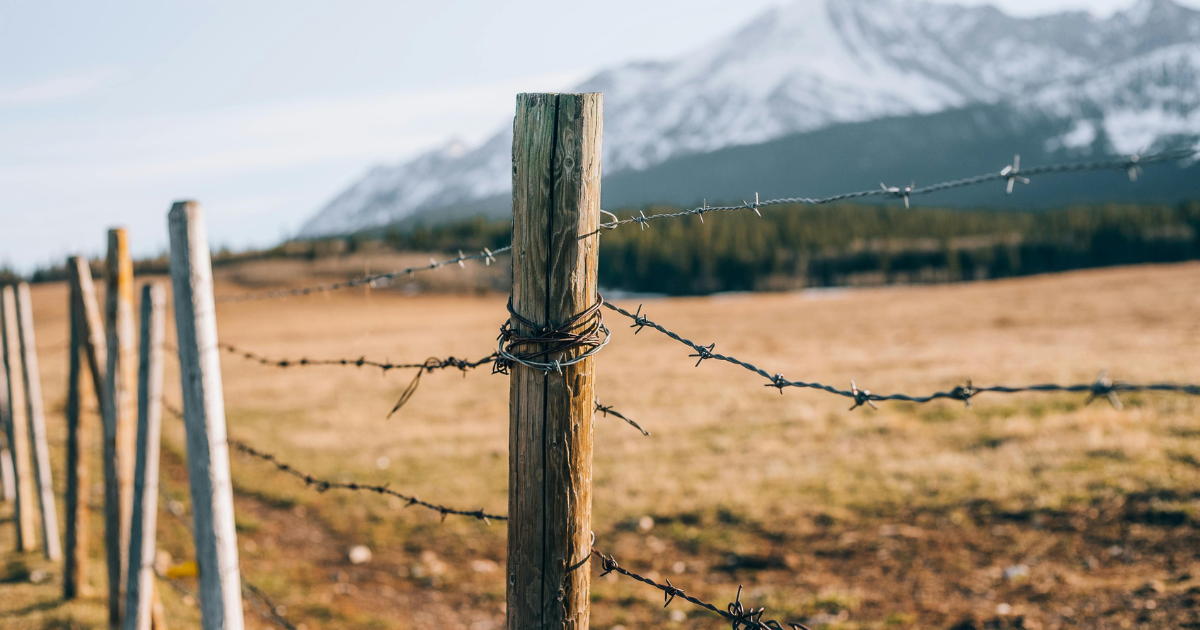
Learn how to run barbed wire fence correctly, from setting posts and braces to stretching wire, spacing strands, and checking fence tension.
Many people think learning how to run barbed wire fence is mostly about pulling wire from one post to another and fastening it in place.
That sounds easy enough, but a fence can look straight on day one and still become loose, saggy, or weak after a few weeks.
The real work is in the setup. Strong end posts, proper bracing, correct wire tension, and good spacing all affect how well the finished fence performs.
If you are planning a livestock fence, property boundary, or another type of agricultural fence, the barbed wire fence you choose is only one part of the job.
You also need to think about your soil, terrain, posts, gates, corners, and the animals you need to contain.
USDA Natural Resources Conservation Service (NRCS) fencing standards also place importance on post spacing, embedment, corner assemblies, and proper wire attachment.
What You Need Before You Start
Before you unroll the first strand, gather your materials and tools.
You will usually need:
- Barbed wire
- Wooden or steel fence posts
- Strong corner and end posts
- Bracing materials
- Fence staples or approved wire fasteners
- Post-hole digger or auger
- Pliers
- Wire cutters
- Fence stretcher or wire tensioning tool
- Measuring tape
- Gloves
- Eye protection
The exact materials depend on your fence design. A livestock fence, for example, may need a different number and height of strands than a boundary fence.
Also check your local rules before construction. Property boundaries, road setbacks, livestock fencing, and fencing near power lines can be subject to local requirements.
1. Plan the Fence Line
Start by marking exactly where you want the fence to run.
Walk the entire route and look for:
- Sharp changes in direction
- Low or wet areas
- Steep slopes
- Roads and driveways
- Gates
- Trees and large roots
- Underground utilities
Try to keep the fence line as straight as practical. Every major bend adds more stress to the fence.
2. Set Strong End and Corner Posts
Your end and corner posts carry much of the tension created when you stretch the wire.
Set these posts firmly before installing the line posts. Depending on the soil and fence design, you may need deeper post embedment or a braced assembly.
Do not skip the braces.
A common mistake is to install heavy wire on a weak corner post. When you tighten the wire, the post can lean instead of holding the tension.
Think of the corner assembly as the foundation of that section of fence. If it moves, the rest of the fence will eventually suffer.
3. Install the Line Posts
Once your corners and ends are in place, install the line posts along the marked fence route.
Post spacing depends on:
- The type of fence
- Wire type
- Soil conditions
- Terrain
- Expected fence pressure
- Local specifications
There is no single spacing number that works for every barbed wire fence.
On flat, firm ground, posts may be spaced farther apart. Rough terrain or areas where animals are likely to push against the fence may require closer spacing.
Keep the posts aligned. A quick sight down the fence line can reveal posts that are leaning or sitting out of position.
4. Decide the Height and Strand Spacing
Now determine where each strand of barbed wire will sit.
Your spacing should match the purpose of the fence and the animals you are containing.
Cattle fencing, for example, does not necessarily use the same arrangement as fencing intended for smaller animals.
Keep the strands reasonably even and follow your fence plan from one section to the next.
Avoid putting the lowest wire too close to the ground. NRCS guidance for certain conservation fence applications specifies that new wire should not be installed less than 12 inches above the ground.
The correct height can vary by project, so use the requirements that apply to your property and livestock.
5. Run the First Strand of Wire
This is where the phrase how to run barbed wire fence really matters.
Start at a properly braced end or corner post. Secure the wire according to the wire manufacturer’s instructions, then pull the wire along the planned fence line.
Keep the roll controlled as you move.
Do not simply drag a loose coil across the ground and hope it behaves. Barbed wire can catch on vegetation, tools, clothing, and other objects.
As you reach each post, keep the wire at the planned height. Temporary marks on your posts can help you stay consistent.
At the other end, secure the wire without applying excessive force.
6. Stretch the Wire Correctly

Proper tension is one of the most important parts of the job.
A loose strand can sag and fail to do its job. But pulling the wire too hard can create other problems, especially when temperatures change or the fence posts are not strong enough.
Use a proper fence-stretching tool rather than trying to create tension by hand.
Once the wire reaches the desired tension:
- Secure it firmly to the end or corner post.
- Attach it to the line posts.
- Check the fence line for excessive sag.
- Release the stretching tool carefully.
- Recheck the tension.
7. Attach the Wire to Each Post
For wooden posts, fence staples are commonly used. Drive them so they hold the wire without crushing or tightly trapping it against the wood.
For steel or concrete posts, use the fastening method recommended for that post system.
Do not improvise with random pieces of wire or hardware. The connection needs to hold the fence securely while allowing the system to work as designed.
NRCS guidance also notes that barbed wire strands should be attached to each post in certain fence installations.
8. Repeat for Each Strand
After the first strand is secure, repeat the process for the remaining strands.
It is usually easier to work from the planned fence layout rather than guessing the height as you go.
Check each section before moving on.
You are looking for:
- Even strand spacing
- Straight posts
- Good wire tension
- Secure fasteners
- Stable corners
- No damaged or badly kinked wire
If something looks wrong now, fix it now. It is much easier than trying to repair a finished fence later.
9. Pay Extra Attention to Slopes and Corners
Flat ground is usually the easiest place to run barbed wire. Slopes need more care.
As the ground rises or falls, the wire can pull differently on the posts. Sharp changes in elevation may require additional bracing or a different fence layout.
The same applies to curves and corners. NRCS engineering guidance calls for special attention to pull posts, corner assemblies, braces, and anchors where fence alignment or ground conditions create additional stress.
If your property has steep slopes, soft soil, or unusual terrain, following a local fence specification is a safer choice than copying a setup from a flat field.
Barbed Wire Fence Safety Tips
Barbed wire can cause serious cuts and puncture injuries, so take the work seriously.
Wear:
- Heavy work gloves
- Long sleeves
- Safety glasses
- Strong boots
Keep children and bystanders away from the work area.
Be especially careful when cutting or releasing tension from wire. Stored tension can cause wire to move suddenly.
Also check for overhead and underground utilities before digging.
OSHA requires workers to determine whether electrical circuits could create a contact hazard before work begins on covered construction activities.
Common Mistakes to Avoid
When learning how to run barbed wire fence, these mistakes are worth watching for:
- Using weak corner posts: The wire may pull the posts out of position.
- Skipping braces: A strong wire system still needs a strong support structure.
- Guessing wire spacing: Uneven strands can reduce how well the fence performs.
- Overstretching the wire: More tension does not always mean a better fence.
- Ignoring the terrain: Hills, dips, and curves change how forces move through the fence.
- Working without protective gear: One careless movement around barbed wire can leave a nasty injury.
How Often Should You Check the Fence?
A new fence should be inspected soon after installation and then checked regularly.
Look for:
- Loose wire
- Leaning posts
- Broken strands
- Damaged staples
- Sagging sections
- Animal damage
- Vegetation pressing against the fence
After heavy rain, storms, livestock pressure, or other major changes around the property, give the fence another inspection.
A small repair today can prevent a much bigger repair later.
Conclusion
Learning how to run barbed wire fence is not just about getting the wire from one end of the property to the other.
The strength of the finished fence depends on the entire system: solid corners, suitable post spacing, proper bracing, correct strand placement, and controlled wire tension.
Take your time with the foundation and layout. Once those parts are right, running and securing the wire becomes much more manageable.
Most importantly, match the fence to your property, livestock, soil, terrain, and local requirements.
When the job involves difficult ground, major boundary work, or a large livestock operation, getting advice from a qualified fencing professional can save you from an expensive rebuild later.