Is touchless car wash better for your car? Learn how touchless washing affects paint, cleaning power, and when it’s the best choice.
Keeping your car clean is important, but it also raises a common question: is a touchless car wash better than a traditional brush or soft-cloth wash?
In many cases, touchless washing is a good option because it avoids physical contact with your paint.
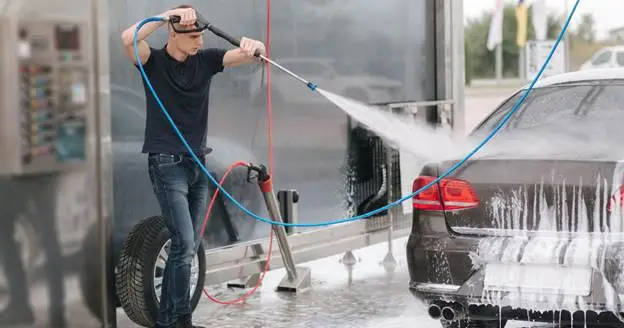
Instead of brushes, it uses high-pressure water and cleaning chemicals to remove dirt.
This reduces the risk of swirl marks caused by dirty or poorly maintained wash materials.
However, touchless systems are not perfect and do not always clean as deeply as other methods.
If you are searching for a car wash near me, knowing these trade-offs can help you choose the right type of wash.
What Is a Touchless Car Wash?
A touchless car wash cleans your vehicle without anything physically touching the paint. It typically uses:
- Cleaning detergents
- High-pressure water jets
- Rinse cycles
- Drying systems
- Sometimes wax or spot-free rinse options
The goal is to loosen dirt with chemicals and wash it away with water instead of scrubbing.
Is Touchless Better for Paint?
For many drivers, the main advantage of touchless washing is reduced risk of scratches.
Since no brushes or cloth touch the surface, there is less chance of dirt being dragged across the paint.
This is important because traditional wash materials can sometimes hold debris from other vehicles, which may cause fine scratches or swirl marks.
However, touchless systems also have a limitation: they may not remove all types of dirt, especially if it is heavily bonded to the surface.
So while touchless is often better for reducing contact-related damage, it is not always the most powerful cleaning method.
Touchless vs. Soft-Touch Wash
The key difference is physical contact.
| Touchless wash | Soft-touch wash |
| No contact with paint | Brushes or cloth touch the car |
| Uses chemicals and water pressure | Uses chemicals plus scrubbing action |
| Lower risk of scratches | Higher risk if materials are dirty |
| May leave stubborn dirt | Usually cleans more thoroughly |
| Best for light maintenance | Better for heavy dirt removal |
Neither option is perfect. A well-maintained soft-touch wash can clean very effectively, but a poorly maintained one can cause damage.
Touchless avoids that risk but may not clean as deeply.
Why Touchless Washes Don’t Always Clean Perfectly
Touchless systems can struggle with stubborn contamination such as:
- Road film
- Dried mud
- Bug splatter
- Tree sap
- Bird droppings
- Heavy brake dust
These materials often need physical agitation to fully remove.
As a result, a touchless wash may leave a thin layer of residue on heavily soiled cars.
This does not mean touchless washing is ineffective. It simply works best for regular maintenance rather than extreme dirt buildup.
Does Touchless Washing Damage Paint?
A properly operating touchless car wash should not damage healthy factory paint.
Since there is no physical contact, the risk of scratching is low.
However, high-pressure water and strong chemicals can still be a concern if:
- The paint is already damaged or peeling
- Seals or trim are loose
- The system is poorly maintained
- Chemicals are too harsh or improperly balanced
This is why results can vary between different locations, even if they use similar equipment.
What About Ceramic Coatings and Wax?
If your car has a ceramic coating, wax, or paint protection film, you should be more careful with wash chemicals.
Some touchless systems use stronger detergents to compensate for the lack of scrubbing.
While this is usually safe, repeated exposure to harsh chemicals may reduce the lifespan of some protective coatings over time.
It is best to follow the care instructions provided by the coating or protection manufacturer.
Not all automatic washes are equally suitable for all finishes.
Is Touchless Good for New Cars?
Touchless washing is often a good choice for new cars because it reduces the chance of swirl marks on fresh paint.
New vehicles can show fine scratches more easily under sunlight, so avoiding physical contact helps preserve their appearance.
However, regular washing is still important. Dirt, salt, bugs, and bird droppings can damage paint if left too long.
The key is consistency—cleaning your car regularly is more important than the method alone.
When to Use a Touchless Car Wash
A touchless wash is a good option when:
- You want to avoid physical contact with paint
- Your car is lightly or moderately dirty
- You need a quick maintenance wash
- You are concerned about swirl marks
- You wash your car regularly
It works best as part of a routine cleaning schedule rather than for heavily soiled vehicles.
When a Hand Wash Is Better
A touchless wash may not be enough if your car is very dirty. In cases like:
- Heavy mud
- Stuck-on bugs
- Tree sap
- Thick road grime
A careful hand wash is often more effective because it lets you clean problem areas directly.
However, hand washing must be done correctly. Using dirty sponges or improper techniques can also cause scratches, so it is not automatically safer unless done properly.
How to Get Better Results From Touchless Washing
To improve results, choose a well-maintained facility that:
- Uses quality cleaning chemicals
- Has strong but balanced water pressure
- Offers a spot-free rinse option
- Keeps equipment clean and maintained
- Provides clear wash package options
If your car is extremely dirty, rinsing off loose debris beforehand can also help improve cleaning performance.
Is Touchless Car Wash Better Overall?
For most everyday drivers, touchless washing is a strong option, especially if protecting paint from scratches is a priority.
However, it is not always the best choice in every situation.
- For light maintenance: touchless is ideal
- For heavy dirt: hand washing may work better
- For scratch prevention: touchless is safer
- For deep cleaning: soft-touch or hand wash is stronger
The best method depends on your car’s condition and how often you clean it.
Conclusion
So, is a touchless car wash better? In many cases, yes, especially if your goal is to reduce the risk of scratches and swirl marks caused by physical contact.
However, it is not a perfect cleaning solution. It may struggle with heavy dirt and depends heavily on the quality of the chemicals and equipment used.
The best approach is to use touchless washing for regular maintenance and switch to a more thorough cleaning method when needed.
Choosing a well-maintained car wash and cleaning your vehicle consistently will do more for your paint than relying on any single method alone.