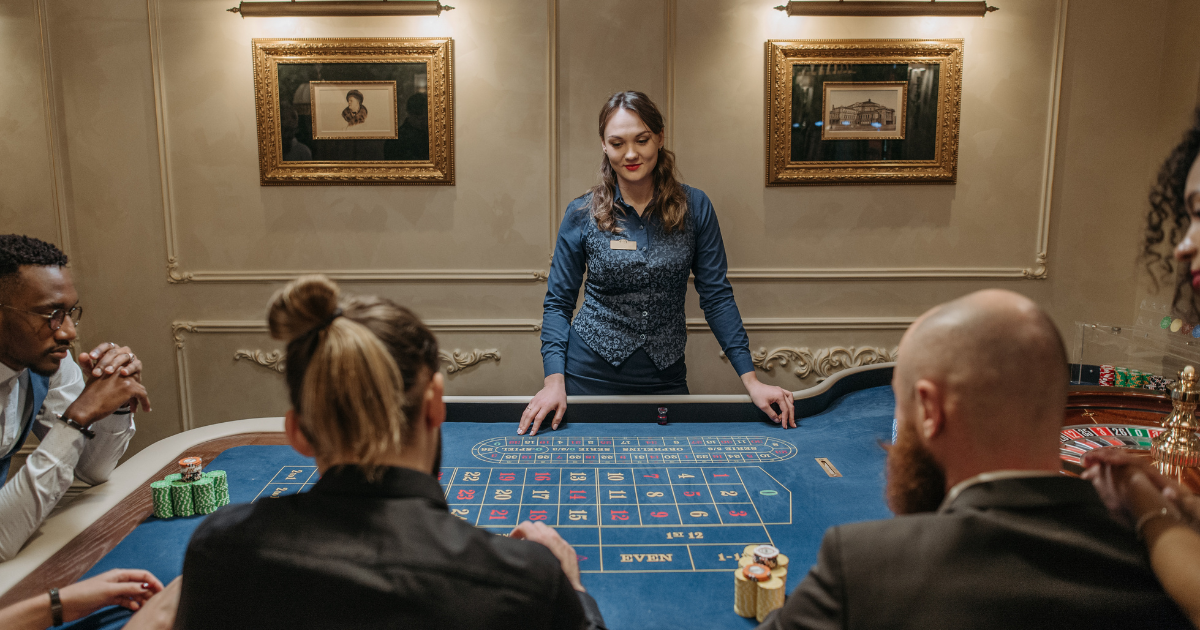
The history of casino games spans dice, cards, roulette, slots, and digital play, showing how games of chance changed across centuries.
The history of casino games is much older than the modern casino building.
Long before flashing machines and large gaming floors existed, people played games involving dice, cards, wheels, and chance.
Some games were created for social entertainment, while others became connected with wagering over time.
Playing cards, for example, have a long documented history, with surviving European cards dating back to the 15th century.
The British Museum holds examples from this period, while the Library of Congress notes that playing cards appeared in China as early as the 9th century.
Even today, terms such as toto Macau (Macau Toto) can appear in discussions about number-based games, but the history of casino games covers a much wider story.
It is really a story about how people created, changed, and shared games based on chance.
Where Did Casino Games Begin?
The history of casino games does not have one single starting point.
Games involving chance existed in many societies before casinos became formal businesses.
Dice are among the oldest known gaming objects, while board games were played in ancient Egypt.
The Library of Congress also notes that playing cards appeared in 9th-century China.
Over time, these forms of play developed into more organized games.
Three things helped shape this change:
- Dice introduced simple random outcomes.
- Playing cards allowed for many different game rules.
- Gaming houses gave players a regular place to play.
The word “casino” itself originally referred to a small house or pleasure building rather than specifically a gambling venue.
Its meaning changed over time as gaming became associated with these establishments.
How Playing Cards Changed Casino Games
Cards had a major influence on the history of casino games.
European playing cards became increasingly common during the 15th and 16th centuries.
Museums now preserve examples that show how much card design could vary between places and periods.
For example, the British Museum has a 15th-century German pack and a 1544 French pack of 52 cards.
These historical objects show that playing cards were already being produced in different styles centuries before modern casinos appeared.
Card games then developed into many different forms.
Some focused mainly on matching or collecting cards, while others depended heavily on chance.
This long card-game tradition later helped shape games such as baccarat and blackjack.
The Rise of Roulette
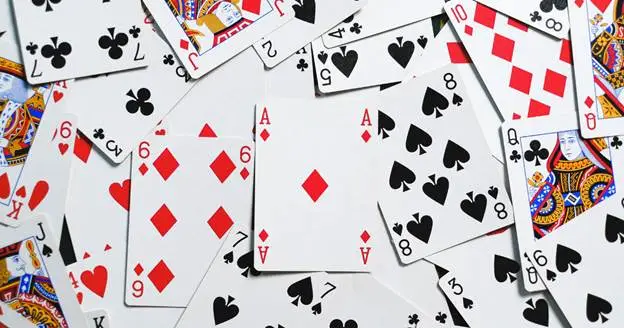
Roulette became one of the best-known wheel-based casino games.
Its exact early history is not completely settled.
Research notes that one popular account connects roulette with Blaise Pascal’s 17th-century experiments with mechanical motion, although the historical evidence for this story is uncertain.
What is clearer is that roulette eventually developed into a recognizable European gambling game and became strongly associated with casinos.
The wheel also shows an important pattern in the history of casino games: an older idea can be changed into a more structured game with fixed rules, numbered outcomes, and a dedicated playing surface.
Baccarat and Other Card Games
Baccarat is another important part of casino history.
Historical reference works describe baccarat as a card game of Italian origin that was introduced into France in the late 15th century.
Its popularity later spread more widely.
Different versions developed, including baccarat chemin de fer and baccarat banque.
The rules and role of the banker could differ between versions.
Other card games followed their own paths.
Blackjack, also known as twenty-one, became known for its simple goal: getting a hand value closer to 21 than the dealer without going over.
These games show why card games remained important: the same basic deck could support very different rules and styles of play.
How Slot Machines Changed Casino Games
The history of casino games took another major turn with mechanical gaming machines.
One important development was Charles Fey’s Liberty Bell machine.
Current research records the Liberty Bell as an early three-reel machine, while the SFO Museum describes the 1898 Liberty Bell as the first automatic-payout, three-reel machine.
Instead of sitting around a table with other players, a person could interact directly with a machine.
That changed the experience in several ways:
- The game could be played by one person.
- Results appeared quickly.
- Mechanical reels created a visible sense of movement.
- Automatic payouts reduced the need for an attendant.
The basic reel concept later influenced many forms of electronic and digital gaming.
From Traditional Tables to Digital Games
Technology changed casino games again.
Mechanical systems were gradually replaced or supported by electronic systems.
Later, computer technology made it possible to create games without physical reels, cards, or wheels.
This created a new form of casino-style entertainment:
- Electronic table games
- Video-based games
- Computer-generated outcomes
- Online versions of traditional games
- Mobile gaming interfaces
The important point is that digital games did not appear from nowhere.
They borrowed familiar ideas from older games and adapted them to new technology.
What the History of Casino Games Shows
The history of casino games is really a history of adaptation.
The main changes can be viewed as a timeline:
- Ancient games: Dice and other chance-based activities.
- Early card traditions: Playing cards developed and spread across cultures.
- Gaming houses: Games became more organized in dedicated social spaces.
- Table games: Roulette and card games developed fixed structures.
- Mechanical machines: Slot machines introduced automated play.
- Electronic systems: Computers changed how games could operate.
- Digital platforms: Traditional game formats moved into software and online environments.
Each stage kept some older ideas while adding something new.
Conclusion
The history of casino games reaches far beyond modern gaming floors.
It includes ancient dice, early playing cards, European table games, mechanical slot machines, and later digital systems.
What makes this history interesting is the way familiar ideas keep being redesigned.
A deck of cards can become dozens of different games.
A physical wheel can become a digital interface.
A mechanical machine can become computer software.
Understanding that development also gives useful context when looking at modern games.
Rather than seeing today’s casino games as completely new inventions, it is more accurate to view them as the latest stage in a long history of games built around chance, rules, technology, and human curiosity.